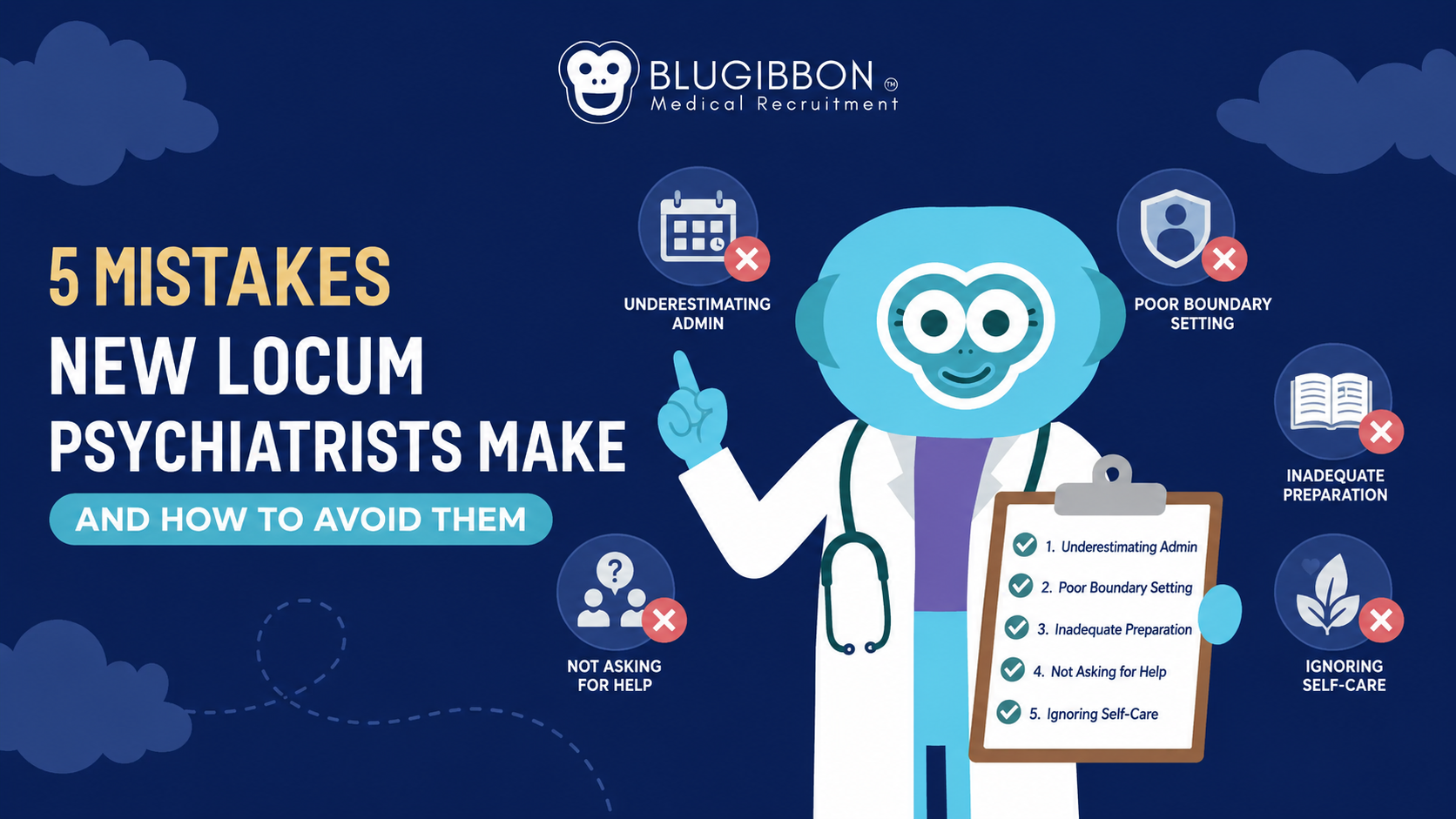
5 Mistakes New Locum Psychiatrists Make and How to Avoid Them
5 Mistakes New Locum Psychiatrists Make and How to Avoid Them
A practical guide to starting locum psychiatry work with confidence
Starting out as a locum psychiatrist can feel exciting, flexible and full of opportunity.
It can also feel unfamiliar.
New health services. New referral pathways. New electronic medical records. New teams. New risk processes. New contracts.
Most Psychiatry Registrars and Specialist Psychiatrists are clinically ready for locum work. The part that can catch people out is usually not the medicine — it is the logistics, communication, compliance and role fit.
This guide covers five common mistakes new locum psychiatrists make, and how to avoid them, so you can start locum work with more confidence, better support and fewer surprises.
1. Underestimating Psychiatry Compliance and Credentialing
One of the biggest surprises for first-time locum psychiatrists is how much paperwork is required before a placement can be confirmed.
Psychiatry locum roles often require detailed compliance because doctors may be working across inpatient units, community mental health teams, crisis services, forensic settings, CAMHS, older persons mental health, consultation-liaison teams or regional services.
Common oversights include:
Missing immunisation records
Out-of-date mandatory training
Incomplete referee details
Delays with police checks or working with children checks
Incomplete Medicare, AHPRA or fellowship documentation
Not having recent evidence of psychiatry experience ready
For some mental health services, delays in compliance can mean missing out on a role altogether.
How to avoid it
Create a digital locum folder with your key documents ready to go.
Include:
Photo ID
AHPRA registration
FRANZCP, RANZCP or training documentation where relevant
Current CV
Immunisation history
Mandatory training certificates
Police check
Working with children check, where required
Referee details
Visa or work rights documentation, if applicable
Medicare provider number details, where relevant
Keeping this folder up to date saves time and removes unnecessary stress when the right psychiatry locum role becomes available.
A good recruiter should also help you understand what each service needs before you are submitted.
2. Leaving Psychiatry Role Submissions Too Late
Mental health services often move quickly, especially when they need urgent locum cover.
This is particularly true for high-demand areas such as General Adult Psychiatry, Child and Adolescent Psychiatry, Older Persons Mental Health, Consultation-Liaison Psychiatry and regional mental health services.
A common mistake is waiting too long to confirm availability, return paperwork or approve a submission.
By the time everything is ready, another psychiatrist may already have been presented, interviewed or booked.
How to avoid it
Respond promptly when a suitable role is sent to you.
Confirm your availability clearly
Send documents as early as possible
Flag any delays upfront
Be clear about your preferred dates, locations and subspecialties
Let your recruiter know if you are speaking with multiple agencies
Fast, clear communication makes a huge difference in locum psychiatry.
It also helps your recruiter advocate for you properly. If Jay and the Blugibbon Mental Health team know your preferences, availability and non-negotiables, they can move quickly when the right role comes in.
3. Overcommitting Before You Know Your Locum Rhythm
It can be tempting to say yes to everything when you first start locuming.
A four-week inpatient role. Then a community contract. Then a regional placement. Then on-call. Then another contract straight after.
The flexibility and earning potential of locum psychiatry can be very appealing, but overcommitting early can lead to fatigue, stress and a poor first experience.
Psychiatry work can be emotionally demanding. Risk management, complex presentations, involuntary treatment processes, family meetings, tribunal work and service pressures all take energy.
How to avoid it
Build space into your first few locum placements.
Trial shorter contracts first
Leave gaps between roles where possible
Ask about workload and on-call expectations
Be realistic about travel and recovery time
Consider whether the role is inpatient, community, crisis, CL, CAMHS, old age or forensic
The goal is not to work non-stop.
The goal is to locum well.
A sustainable locum psychiatry career is built on good role selection, honest communication and knowing how you work best.
4. Not Asking Enough Questions About the Mental Health Service
Many new locum psychiatrists worry that asking too many questions will make them appear difficult.
In reality, the best locums ask good questions early.
Psychiatry roles can vary significantly between services. A “community psychiatry” role in one health district may look very different from a community role somewhere else. An inpatient consultant role may vary depending on bed numbers, junior support, registrar cover, tribunal load, escalation pathways and after-hours expectations.
Not asking enough upfront can lead to avoidable surprises once you arrive.
What to clarify early
Before accepting a locum psychiatry role, ask about:
Subspecialty and patient cohort
Inpatient, community, crisis, CL, CAMHS, old age or forensic setting
Bed numbers or caseload size
On-call requirements
Tribunal or Mental Health Act responsibilities
Junior doctor support
Multidisciplinary team structure
Escalation pathways
Expected working hours
Telehealth or face-to-face requirements
Electronic medical record systems
Travel ✈️ and accommodation 🏨 arrangements
Start date, end date and extension potential
Asking the right questions does not make you difficult.
It makes you prepared.
A specialist psychiatry recruiter should be able to give you clear role information before you commit, not vague promises after the fact.
5. Choosing Psychiatry Locum Roles Based Only on Rate
Pay matters.
Psychiatrists are highly skilled doctors, and fair remuneration is important.
But choosing a locum role based only on the rate can be a mistake.
A high-paying role with unclear expectations, limited support, heavy on-call, poor accommodation or vague service information may not be the best option. A slightly lower rate in a well-supported service with clear expectations may offer a far better overall experience.
How to avoid it
Look at the whole role, not just the daily or hourly rate.
Consider:
Clinical setting
Subspecialty fit
Hospital or service reputation
Team structure
On-call and escalation support
Caseload and workload
Travel logistics
Accommodation quality
Contract length
Extension options
How well the role matches your lifestyle and career goals
The best locum psychiatry roles balance fair pay, clinical fit, lifestyle and support.
That is where working with a specialist recruiter matters.
Final Thoughts: Locum Psychiatry Is a Skill
Locum work is not just a different contract type.
It is a different way of working.
You learn how to onboard quickly, ask better questions, understand new systems, manage expectations and choose roles that suit the way you practise.
Like any skill, locuming improves with experience.
It also improves with the right support around you.
Preparation, communication and honest role matching can be the difference between a stressful contract and a brilliant locum experience.
Thinking About Your First or Next Locum Psychiatry Role?
Whether you are a Psychiatry Registrar exploring locum work for the first time, a Consultant Psychiatrist looking for flexibility, or a Specialist Psychiatrist seeking premium opportunities across Australia, the right guidance matters.
At Blugibbon, our Mental Health division is led by Jay Wheatley, Head of Recruitment – Mental Health.
Jay and the Blugibbon team work with exceptional psychiatrists who want more than a basic placement service. We offer clear role information, transparent rates, practical support and honest advice before, during and after your placement.
With Blugibbon, you can expect:
Specialist psychiatry recruitment support
Transparent role matching
Competitive rates
Travel ✈️ and accommodation 🏨 coordination where available
Support with compliance and onboarding
Access to psychiatry locum roles across Australia
A real recruiter who understands mental health recruitment
Forget the rest. Work with the best.
If you are considering your first or next locum psychiatry role, speak with Jay Wheatley and the Blugibbon Mental Health team today.
Locum psychiatry should work for you.

Recent Posts