Where to Find Anaesthetic Locum Jobs in Australia and New Zealand
Where to Find Anaesthetic Locum Jobs in Australia and New Zealand
By Sam Whitaker
If I were an anaesthetist looking for my next locum or permanent role in Australia or New Zealand, I would not start by firing my CV off in ten different directions and hoping something sticks.
I would start with the right places.
Because in anaesthetics, the best jobs are not always the ones shouting the loudest.
Some are advertised publicly. Some sit on college and society job boards. And some of the best ongoing locum opportunities are hiding behind permanent vacancies in regional and remote hospitals that simply do not have enough doctors to cover the lists and support the community properly. That is a key theme from the transcript and draft you shared.
The real opportunity is often not the ad itself. It is the gap behind it.
Start with the college
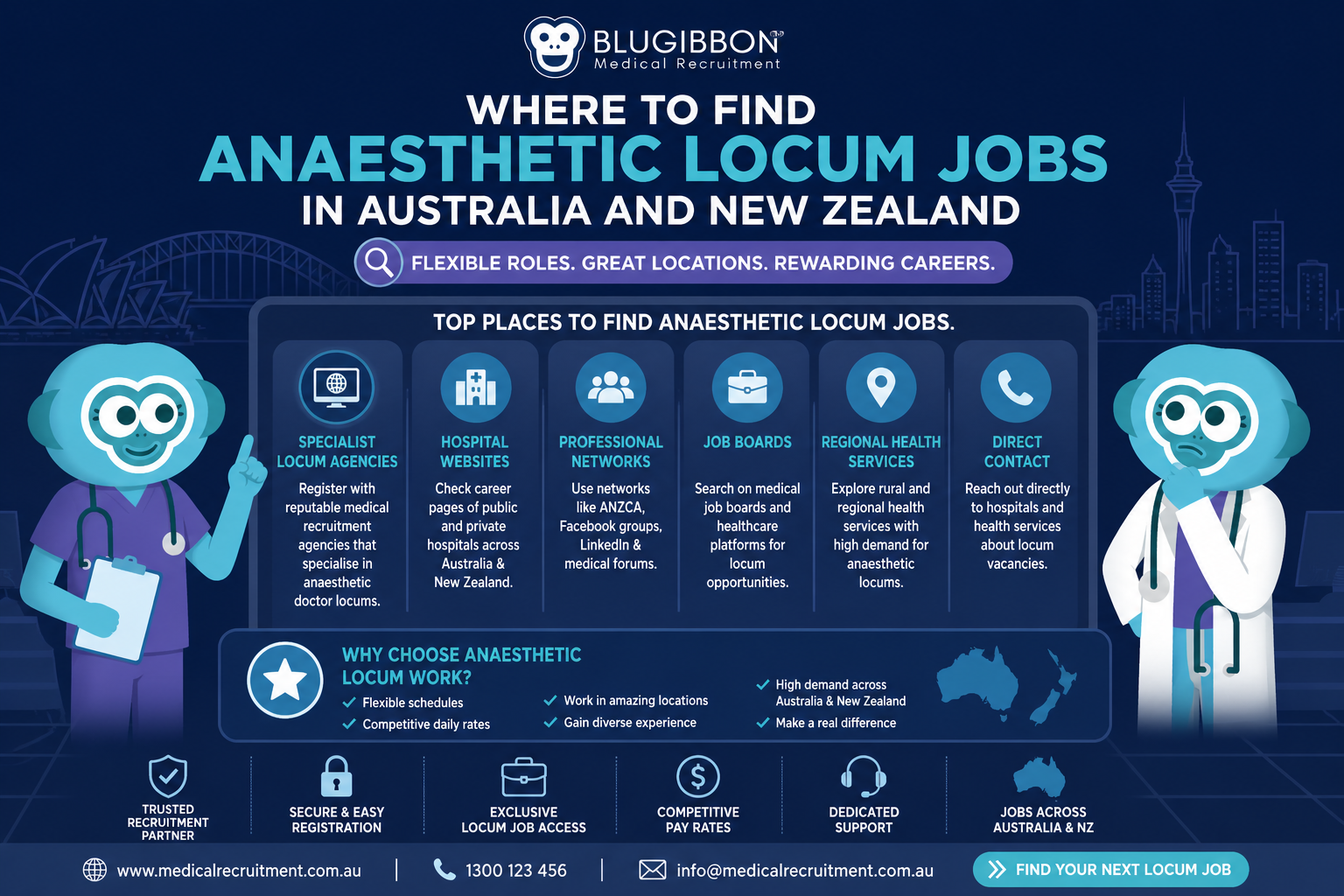
My first stop would always be ANZCA.
If you are a FANZCA, a trainee anaesthetist, or a doctor trying to move into that space, the college is a logical place to begin. It gives you visibility over advertised roles, career resources, events and the broader shape of the market. That starting point came directly through in the transcript and draft.
But here is the part I think a lot of doctors miss.
Quite often, where there is a permanent anaesthetic vacancy in a regional or remote location, there is also an ongoing locum need sitting underneath it. If a hospital is one or two FTE short, it still needs its theatres covered. It still needs its community looked after. And until that permanent gap is solved, there is room for a reliable locum to step in and become genuinely valuable.
That is where smart locums can build something much better than random one-off shifts.
Check the specialist societies too
The Australian Society of Anaesthetists is another very good place to look.
Professional societies matter because they speak directly to the specialty. The audience is right, the jobs are relevant, and the employers posting there usually know exactly who they want to reach. The earlier draft also highlighted the value of ASA and similar specialist channels for finding anaesthetic opportunities.
These sites do more than just show vacancies. They give you a read on the market. You start to see where the movement is, where departments are under pressure, and where demand is building.
That context helps.
Do not ignore state and territory health job boards
Every state and territory has its own job board, and these are absolutely worth checking.
Public hospital sites can show you where consultant roles are open, where registrar positions are active, and where recruitment pressure is sitting. Even if the job itself is permanent, it can still tell you a lot about where ongoing locum opportunities may exist. That advice was also reflected in the transcript.
Sometimes the ad is permanent.
But the real message is: this site needs help now.
And that is useful information if you are looking for repeat blocks, longer-term locum options, or a foot in the door with a department that may need support for months, not days.
Why regional and remote anaesthetic work can be so attractive
This is where the locum market gets interesting.
When you find the right regional or remote site, locum work does not have to mean chaos. It does not have to mean waiting around for a last-minute call and then scrambling to organise flights, family, accommodation and life around it.
It can be structured.
It can be one week in four. One week in six. One week every few months. A regular block that works for you, works for the hospital, and gives the community proper continuity. That exact model came through strongly in the transcript, including the value of seven-day blocks and repeat coverage.
When you get that right, a locum job becomes much more rewarding.
You know where you are going. Your family knows the plan. The travel is sorted. The accommodation is familiar. The department knows you. And instead of spending the first two days figuring the place out, you can arrive already orientated and ready to add value.
That is better for everyone.
The best locum setups often come from continuity
One of the best models we have seen is where a site has an ongoing need and a small group of doctors works together to cover it.
That can be a group of doctors with similar skill sets, similar levels of experience, and ideally some existing trust or friendship between them. The transcript described this clearly: doctors sharing blocks across a longer roster, handing over practical insights, and helping each other understand the department, the people and the local environment.
That kind of setup gives the hospital continuity.
It gives the doctors predictability.
And it gives patients better care because the clinicians arriving on site are not walking in cold every single time.
To me, that is one of the biggest wins in regional locum work.
Pick your recruiter properly
This matters more than people think.
If you are going to work with an agency, the relationship with the recruiter is everything. Not every recruiter understands anaesthetics. Not every recruiter knows the hospital panels, the LHD approvals, the state processes, or how to negotiate properly. The transcript was very blunt on this point: ask whether the recruiter will defend you, negotiate for you, and actually represent you well.
That is exactly the right question to ask.
Can this person service you across the locations you want to work?
Can they help end to end?
Or are you going to get handed off to someone else every time the geography changes?
A good recruiter should make your life easier, not more complicated. They should know the market, understand the specialty, be able to access the right opportunities, and have enough backbone to argue for your value when it matters.
Many of the best jobs are never heavily advertised
This is just reality.
A lot of anaesthetic locum work gets filled quietly through trusted agency relationships and existing networks, not broad public advertising. The earlier draft made this point clearly: many hospitals rely on specialist medical recruitment agencies to fill urgent anaesthetic locum gaps.
That means if you only look at public job ads, you are probably only seeing part of the market.
The doctors who hear about the best opportunities first are usually the ones who are already known, already credentialed, and already connected to the right recruiter or department.
That is not hype. That is just how the market works.
Final thoughts
If you are looking for anaesthetic locum jobs in Australia or New Zealand, my advice is simple.
Start with the college.
Check the specialist societies.
Watch the state and territory job boards.
Pay close attention to regional and remote vacancies.
And work with a recruiter who knows the market and will actually represent you properly.
Because the best anaesthetic opportunities are not always the most obvious ones.
Quite often, they are the jobs behind the ad. The repeat block. The site with the ongoing gap. The department desperate for continuity. The community that genuinely needs good doctors.
That is where locum work can become incredibly rewarding.
Not just financially.
Professionally and personally too.
If you want to speak to someone who works specifically across Anaesthetics, ICU and Surgery, call Tom Sambridge today on 0422 702 914 or email tom.sambridge@blugibbon.com.au. Tom works with doctors across Australia on locum, fixed-term and permanent opportunities in these specialties.
Recent Posts