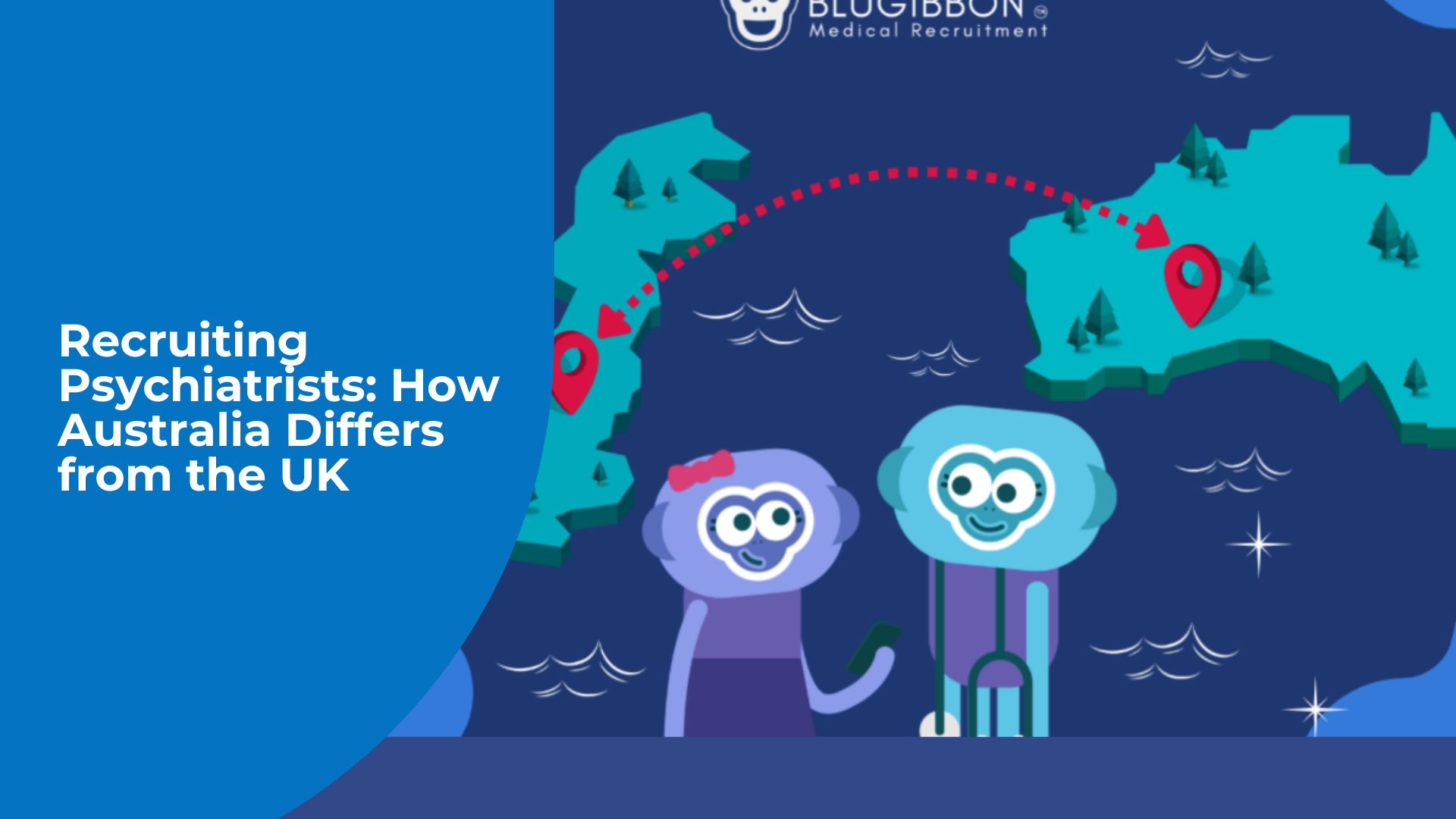
Recruiting Psychiatrists: How Australia Differs from the UK

By Jay Wheatley, Head of Psychiatry Recruitment
It has been just four weeks since I joined Blugibbon after relocating from the UK, and it’s already clear how fundamentally different recruiting in Australia is compared to the UK.
The clinical work may look the same on the surface, but the systems, structures and recruitment strategies behind them require a completely different approach. These differences shape everything. From how roles are filled, to how candidates are supported, to how services maintain safe staffing.
Below, I break down the key contrasts that I have noticed so far!
Market Dynamics: Predictability vs National Shortage
In the UK, much of psychiatry recruitment is driven by predictable workforce patterns. Trusts have large candidate pools and well-established rota systems, and recruitment often becomes a reactive exercise: plugging known gaps, filling sickness cover, and responding to short-notice pressures.
Australia is the opposite. Psychiatry faces a sustained national shortage, particularly outside major cities. This creates a candidate-driven market where demand consistently outweighs supply. Recruitment becomes proactive and long-term, with a strong emphasis on attracting overseas-trained psychiatrists and supporting them through complex registration and relocation processes.

Pay Structures and Incentives
The financial structure behind recruitment is another major difference.
In the UK, most psychiatry locums are paid hourly and must operate within strict NHS rate caps. Allowances are limited, and the focus tends to remain on controlling spend rather than adding incentives.
Australia takes a very different approach. Psychiatrists are usually paid daily rates, often at levels significantly higher than UK equivalents. For regional and rural locations, roles frequently include flights, accommodation and even car hire. Instead of being an operational necessity, these benefits become part of the recruitment strategy - vital for attracting clinicians to remote or
System Structures: NHS Trusts vs LHDs and HHSs
While UK Trusts typically manage services within a relatively compact geographic area, Australian mental health services are organised into Local Health Districts (LHDs) and Health and Hospital Services (HHSs) that can span hundreds of kilometres.
This structural difference has a huge impact on recruitment. A UK Trust might have several hospitals and community teams close together, with recruitment handled through centralised banks and tight compliance frameworks. In contrast, an Australian LHD may be responsible for metro, regional and rural facilities all at once. A single incoming psychiatrist may be asked to combine inpatient work, community clinics, outreach visits and telehealth across multiple locations.
Recruitment, therefore, requires a deeper understanding of service models, geography and funding, rather than simply filling a shift.

Geography: Commuting vs FIFO
In the UK, psychiatrists can generally commute or relocate short-term with minimal disruption. Most Trusts sit within dense, well-connected areas.
Australia’s size changes everything. For many regional and remote locations, psychiatry coverage depends on fly-in, fly-out (FIFO) arrangements. This means recruitment includes flight coordination, accommodation booking, rental vehicle logistics and planning multi-week schedules (often months in advance). The recruiter takes on a logistical role as much as a sourcing one, supporting doctors throughout long-distance assignments.
Candidate Pathways and Compliance
UK onboarding, while process-heavy, is relatively standardised across Trusts. Once documentation requirements are met, locums can begin fairly quickly.
In Australia, recruitment is much more of a consultative journey. Psychiatrists - particularly those from the UK - often need support navigating AHPRA registration, RANZCP assessment pathways, Medicare billing eligibility, and Area of Need documentation. The role of the recruiter becomes part advisor, part case manager, and part educator, ensuring each step is completed correctly to avoid delays lasting months.
The Heart of the Difference 💙
In the UK, recruitment is about filling a clinical need within an established system.
In Australia, it is about building long-term workforce capacity, attracting global talent, and managing wide geographic and logistical challenges.

My Value to the Australian Market
What hasn’t changed across continents is the recruitment fundamentals of:
Do the right things. Do them well. Do it consistently.
I understand the pressures on Australian mental health services, and I understand the motivations and concerns of psychiatrists considering the move. Bringing those worlds together with honesty and expertise is where genuine value is created.
If you’re a psychiatrist exploring opportunities in Australia, or a service struggling with shortages, I’d welcome a conversation!
Action for Clients: Email me your current vacancy list for rapid candidate matching.
Action for Doctors: Forward your CV for a free assessment of your RANZCP eligibility and salary potential.
Email: jay@blugibbon.com.au
Recent Posts